
Sealed glass unit replacement · windows & doors

Foggy windows

Foggy windows and condensation between the panes

If the fog is between the panes and won't wipe off from either side, the seal on the insulated glass unit has most likely failed. The usual fix is a new sealed glass unit — not a new window.
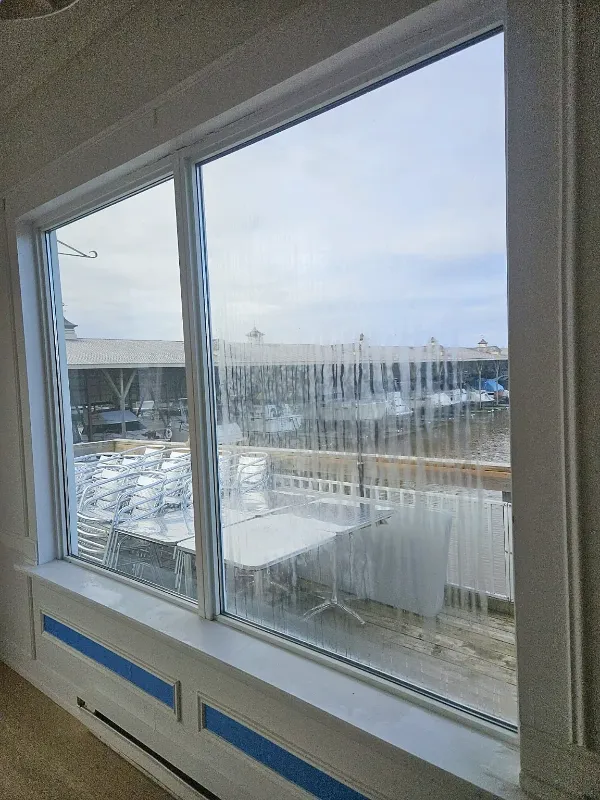
Window with moisture streaks trapped between the panes of a sealed glass unit

Between the panes, or on the surface?

A quick check tells you which problem you have.

Wipes off on the room side

Condensation from indoor humidity. Usually not a failed glass unit.

Wipes off on the outside

Outdoor condensation, often on cool, humid mornings. It is not a sign of a failed unit.

Won't wipe off from either side

The moisture is trapped between the panes. That points to a failed seal — the glass unit needs replacing.

Why cleaning doesn't help

Once moisture gets inside a sealed unit, it's out of reach: the inner glass surfaces can't be cleaned or dried without taking the unit apart, and the seal would still be broken. That's why the sealed glass unit is replaced.

Other signs of a failed seal

  • Haze, streaks or mineral marks inside the glass.
  • Fog that comes and goes with the weather or the time of day.

When a new unit may not be the fix

  • The condensation is on the room side.
  • The frame, or the part of it that holds the glass, is rotten, warped or damaged.
  • Water is leaking around the frame.

Why fog forms between the panes

An insulated glass unit (IGU) is two or three panes of glass with a sealed space between them. A spacer around the edge keeps the panes apart and holds a drying material (desiccant) that absorbs the small amount of moisture sealed inside. As long as the edge seal is tight and the desiccant can still absorb moisture, the space between the panes stays dry.

  • The edge seal ages. Many units are sealed twice around the edge: an inner (primary) seal and an outer (secondary) seal. The materials differ from unit to unit — butyl, silicone, polysulphide or polyurethane — so not every seal is the same. Over the years the sealing materials slowly lose their elasticity and can develop tiny cracks. Daily heating and cooling make the glass expand and contract, and sun (UV), moisture and stress on the unit add to the wear. Once the seal is no longer tight, humid air slowly gets in — and if the unit was filled with an insulating gas such as argon, some of it can escape. The lost gas doesn't cause fog by itself; the fog comes from the moisture that gets in and condenses when the glass cools.
  • The drying material is saturated. The desiccant absorbs the incoming moisture until it can't hold any more. From then on, moisture condenses on the inner glass surfaces whenever the glass is cold enough — first as fog that comes and goes, later as droplets, haze or mineral marks.
  • Water sits against the unit. Water that collects in the frame around the edge of the glass, for example when drainage is blocked, keeps the seal wet and wears it out faster.
  • The glass is damaged. A crack or a chipped edge breaks the seal directly and lets moist air into the unit.

Because the moisture is inside the sealed unit, cleaning the outer surfaces can't remove it. The usual fix is a new sealed glass unit in your existing frame — when the frame is in good condition.

Your options

  • Moisture between the panes: replace the sealed glass unit. The frame stays when it's in good condition.
  • Condensation on the room side: usually indoor humidity — better ventilation and humidity control help; the glass unit is not the cause.
  • Condensation on the outside: normal on cool, humid mornings and not a sign of a failed unit. It clears as the glass warms up.
  • Water in the frame or a damaged frame: that cause needs fixing too, or a new glass unit may not last.

Not sure which one you have? Send photos — the quote is free.

Google Reviews

5.0out of 5

Based on 3 Google reviews

Customer reviews on Google

Read what customers say about Northern Glass Works in our Google reviews, or tell us about your own experience.

Before & after

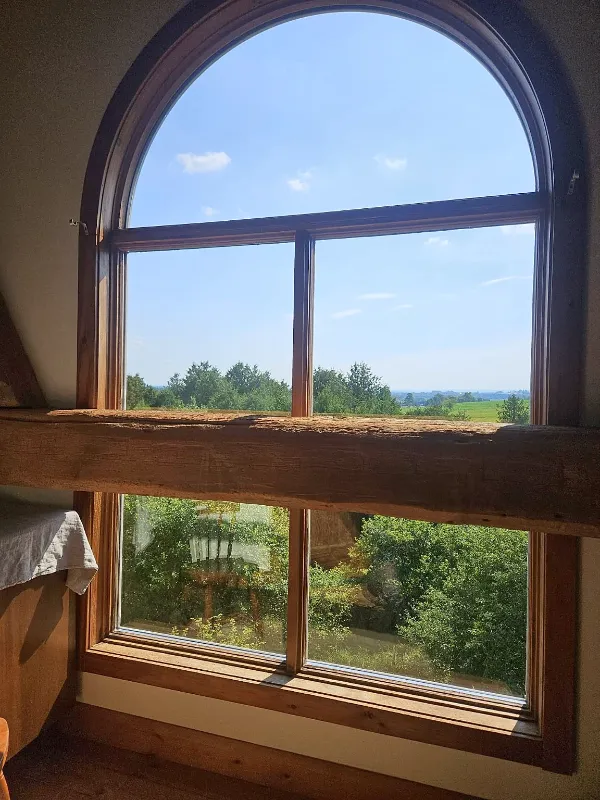
The same arched window: fog and mineral streaks trapped between the panes, then clear glass after the sealed units were replaced.
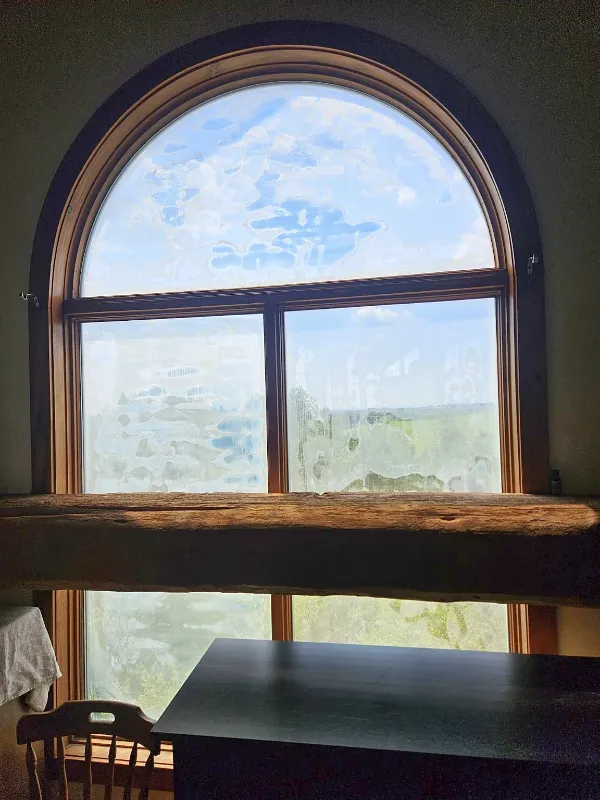
Before Arched window with fog and mineral streaks trapped between the panes of the glass units
After Arched window with clear glass and a view of trees and fields

Send photos for a free quote, or book a free on-site estimate.

The estimate is free. The glass unit replacement itself is quoted in Canadian dollars (CAD).

Foggy or broken glass? Let's talk.

Send photos for a free quote, or schedule a free on-site estimate. We replace the sealed glass unit — when the frame is in good condition, your window or door stays.